OpenAI’s release of hundreds of AI-generated mathematical manuscripts has sparked a debate over whether its latest research meets the standards expected by professional mathematicians. While the company is presenting the work as evidence of advances in AI-assisted mathematics, independent researchers have identified important gaps between some written mathematical arguments and their computer-verified counterparts.
The controversy intensified on October 8, 2026, following the publication of an independent study examining how AI-generated proofs are translated into Lean, a formal verification system widely used in mathematics.
The findings do not establish that OpenAI’s mathematical conclusions are necessarily wrong. Instead, they expose a more fundamental challenge: a computer-verified proof does not automatically validate the mathematical explanation from which it was generated.
Key Takeaways
- OpenAI has released 719 mathematical manuscripts organized into 372 related research families.
- Approximately 42% of the collection’s top-line results have accompanying Lean formalizations.
- Independent researchers identified discrepancies between natural-language arguments and their formal verification.
- A mathematical advisory group is calling for stronger transparency, independent scrutiny, and human understanding.
- The debate raises broader questions about how AI-generated discoveries should be evaluated before gaining scientific acceptance.
OpenAI Releases Hundreds of AI-Generated Mathematical Results
On October 6, OpenAI made a substantial collection of AI-generated mathematical research publicly available through its official GitHub mathematics repository.
The collection currently contains 719 manuscripts divided into 372 families of related results. These families include principal findings, supporting arguments, alternative proofs, and mathematical consequences.
According to OpenAI, most of the results were produced using an unreleased internal AI model evaluated on approximately 4,000 mathematical problems.
The company says it expanded its evaluations to open research questions after its existing mathematical tests became less useful for measuring further improvements.
However, the publication of hundreds of manuscripts should not be interpreted as confirmation that OpenAI has independently solved hundreds of previously unresolved mathematical problems.
The company explicitly acknowledges that its findings are at different stages of verification. Some results have accompanying formal proofs, while others have not yet undergone that process.
OpenAI reports that approximately 42% of its top-line results have been formalized in Lean. This figure refers to leading results, not necessarily the proportion of all 719 manuscripts that have been verified.
The repository also includes ten abridged summaries of the model’s reasoning.
Although these disclosures represent a step toward transparency, they leave significant questions about the accuracy, originality, and mathematical importance of individual results.
Mathematicians Say AI Discoveries Need Stronger Standards
The Advisory Group on Mathematics and Artificial Intelligence (AGMAI), an independent organization hosted by the Institute for Advanced Study, has expressed concerns about how frontier AI laboratories publish advanced mathematical findings.
In its September 29 recommendations on responsible AI-generated mathematics, the group emphasized that mathematical research involves more than presenting a technically plausible solution.
Traditionally, researchers are expected to understand their arguments, verify their reasoning, explain their findings to colleagues, and take responsibility for published work.
AI-generated mathematics creates a different situation.
An advanced model may produce an intricate mathematical argument that even the person operating the system cannot fully explain or evaluate.
AGMAI argues that companies publishing such work should help the scientific community develop the understanding necessary to evaluate and incorporate these results.
Its recommendations include disclosing model information, prompts, reasoning summaries, computational resources, and formalization details.
The group also urges AI companies to stop testing advanced open mathematical problems using proprietary models that are inaccessible to independent researchers.
This recommendation is particularly relevant because OpenAI’s latest results were primarily generated using an unreleased internal system.
In an October 6 statement addressing OpenAI’s mathematical release, AGMAI clarified that its discussions with the company should not be interpreted as an endorsement of the published results or the methods used to produce them.
The group emphasized that evaluating the findings ultimately remains the responsibility of the mathematical community.
Why Lean Verification Cannot Guarantee Every AI Proof Is Correct
A central issue in the controversy involves Lean, a proof assistant that allows mathematical statements and arguments to be represented in a precise formal language.
When a properly constructed proof passes Lean’s verification process, the system provides strong assurance that the formal conclusion follows from its encoded premises and permitted rules.
This makes Lean an important tool for identifying logical mistakes.
But there is a critical limitation.
Many mathematical papers are initially written in natural language, using mathematical notation alongside explanatory text.
AI systems can attempt to translate these arguments into Lean code through a process known as autoformalization.
The difficulty is ensuring that the formal translation faithfully represents the original mathematical argument.
Imagine a researcher claims that a theorem holds under four specific conditions.
If an AI translates the statement into a version that requires a fifth condition, the resulting formal proof could be logically valid while proving something weaker than originally claimed.
The same problem can arise when a system replaces an incorrect argument with a different, correct argument during translation.
In that situation, Lean verifies the new formal proof, not necessarily the reasoning presented in the original manuscript.
The distinction matters because mathematical accuracy depends on both logical validity and precise correspondence between claims and supporting arguments.
Independent Study Identifies Problems in Navier-Stokes Formalization
A new research paper provides concrete examples of the risks involved in AI-generated mathematical verification.
Published on October 6, the study, Navier-Stokes Lost in Translation: Why Lean Verification of AI Autoformalisation Does Not Guarantee Correct Natural Language Proofs, was written by Alexander Bastounis, Fabian Circelli, and Anders C. Hansen.
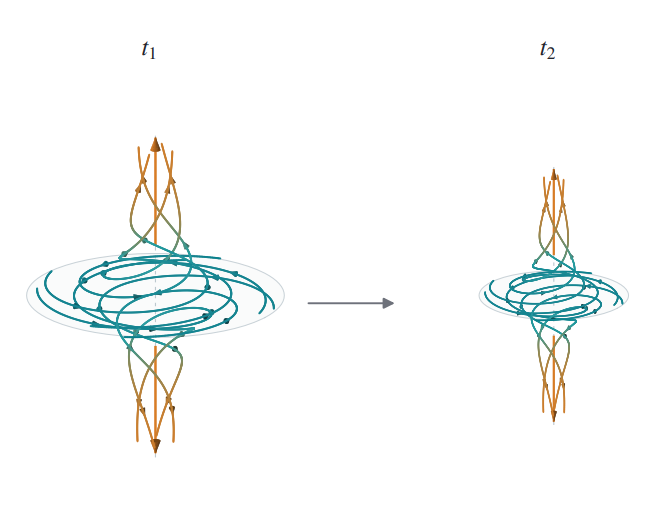
The researchers examine discrepancies between natural-language mathematical arguments and their Lean formalizations, including work associated with OpenAI’s announced proof concerning finite-time blow-up in the Navier-Stokes equations.
These equations describe the motion of fluids and are connected to one of mathematics’ most difficult longstanding problems.
The researchers identified a specific discrepancy involving derivative requirements.
One estimate in OpenAI’s written argument uses four additional derivatives, while the corresponding Lean formulation requires five.
This difference matters because the formalized statement imposes stronger mathematical assumptions than the written version.
The study also identifies a mismatch involving a pressure-related estimate, where the formal proof uses a different mathematical argument and establishes a different bound.
These examples suggest that successful formal verification should not automatically be treated as confirmation of the complete natural-language proof.
Importantly, the study’s authors explicitly avoid claiming that OpenAI’s original mathematical proof is incorrect.
Their conclusion is narrower: the formalized arguments they examined do not faithfully correspond to the written arguments, meaning the Lean verification alone cannot establish the correctness of the original reasoning.
The research is available as a preprint, and its findings should themselves be considered subject to further mathematical scrutiny.
What OpenAI’s Math Controversy Means for the Future of AI Research
The disagreement illustrates a growing challenge for artificial intelligence research.
AI systems are becoming capable of producing sophisticated mathematical arguments, but evaluating those arguments remains a demanding scientific task.
As the volume of AI-generated research increases, the mathematical community may face a growing burden of assessing claims that were produced much faster than humans can thoroughly review them.
This creates several challenges for AI developers.
First, mathematical results must be presented with sufficient documentation to make independent verification practical.
Second, formal proof systems should be accompanied by evidence that the verified statements accurately represent the original claims.
Third, researchers need opportunities to understand why a result works, how it connects to existing knowledge, and whether it introduces genuinely useful mathematical ideas.
These requirements extend beyond mathematics.
Similar questions could arise when AI systems generate scientific hypotheses, software verification arguments, or technically complex research in other fields.
For readers following the development of advanced AI, the debate highlights the difference between producing convincing technical output and establishing reliable scientific knowledge.
More coverage of AI research, emerging technologies, and major industry developments is available at TechNewsHome.
OpenAI’s mathematical release may eventually prove important. But its lasting significance will depend on how many results withstand independent verification and contribute to human understanding.
The central question is no longer simply whether AI can generate mathematical proofs. It is whether those proofs can be independently understood, trusted, and incorporated into established science.
Frequently Asked Questions
Has OpenAI solved 719 mathematical problems?
Not necessarily. OpenAI has published 719 mathematical manuscripts organized into 372 families. The correctness, novelty, and significance of individual results still require independent evaluation.
What is Lean mathematical verification?
Lean is a proof assistant that checks whether formal mathematical arguments follow logically from their assumptions. It does not automatically establish that an AI-generated translation accurately represents an original written proof.
Are OpenAI’s AI-generated mathematical proofs wrong?
Researchers have identified discrepancies between certain written arguments and their Lean formalizations. These findings do not establish that all of OpenAI’s mathematical conclusions are incorrect.
Official and Reliable Sources
- OpenAI — Official Mathematical Research Repository (GitHub) — Primary documentation of the published manuscripts, formalization status, research methodology, and reasoning summaries.
- AGMAI — Responsible Release of AI-Generated Mathematics — September 29, 2026, recommendations concerning transparency, publication standards, and human understanding.
- Bastounis, Circelli and Hansen — Navier-Stokes Lost in Translation (arXiv) — October 6, 2026, research paper examining discrepancies between written mathematical proofs and Lean formalizations.
- AGMAI — Statement on OpenAI’s Release of Mathematical Results — October 6, 2026, official response clarifying the advisory group’s position and the importance of independent evaluation.