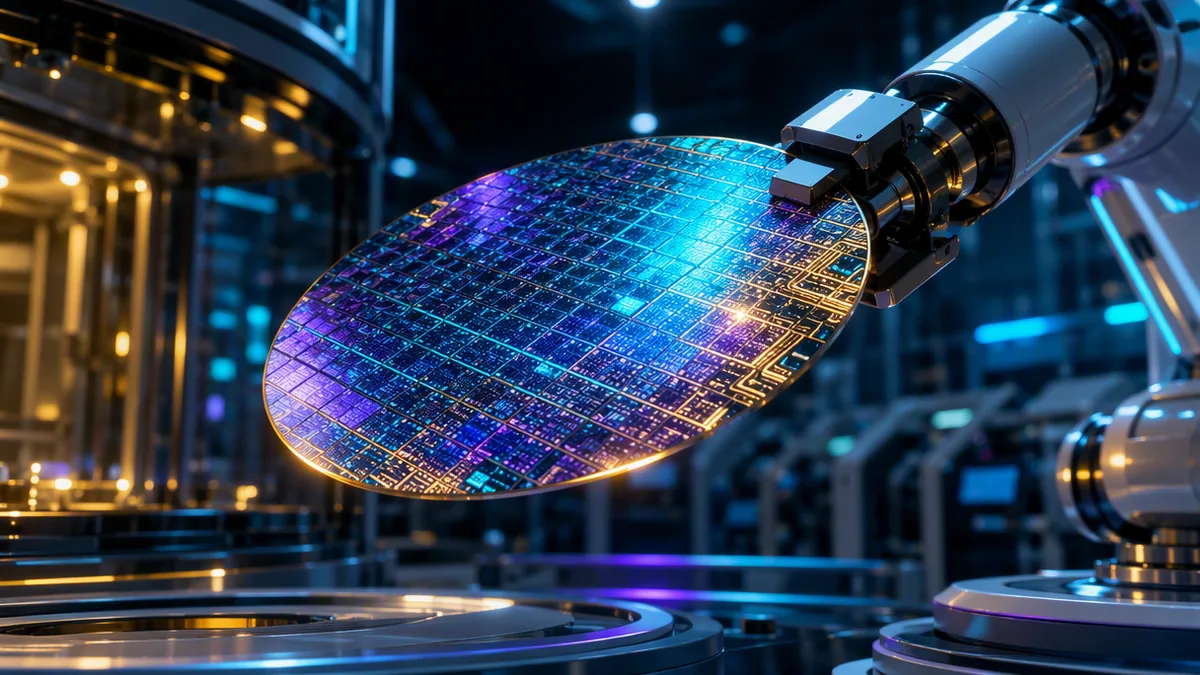
If you want a single number that captures the AI boom, try this one: NT$514.81 billion. That is TSMC’s revenue for August 2026 alone, roughly $16.3 billion, the first time the world’s leading chipmaker has ever broken the NT$500 billion mark in a single month.
Anatomy of a record
Records at TSMC’s scale do not happen by accident. A 53% year over year jump, on top of already enormous 2025 numbers, reflects a structural shift in what the world’s data centers are buying. AI accelerators, from flagship training silicon to inference chips, consume the most advanced wafers TSMC can produce, and they consume them in volumes that were unimaginable five years ago.
The demand is also broad. It is not one customer or one product line: 5 nm class nodes alone still account for roughly a third of revenue, while 3 nm is fully booked and 2 nm, at about 3% of revenue, is just beginning its ramp. When the most advanced node and the workhorse nodes are simultaneously sold out, you are looking at a market with no spare capacity anywhere.
The 2 nm ramp and the Apple effect
TSMC’s N2 process is expected to reach 100,000 wafers per month by the end of 2026, an aggressive ramp for a brand new node. The first mass market beneficiary will be Apple’s A20 Pro, the chip destined for the next iPhone generation, built on 2 nm technology. Apple’s volumes alone can fill a new node’s early capacity, which is precisely why competitors are already booking further ahead than ever.
This booking behavior matters beyond TSMC’s earnings report. When AI companies and consumer giants reserve fab capacity years in advance, everyone else, from automotive suppliers to smaller chip designers, queues behind them. The memory market is feeling the same squeeze, with DRAM pricing elevated as AI servers absorb supply.
A 72.5% problem for everyone else
TrendForce’s estimate of TSMC’s foundry share, roughly 72.5% for Q2 2026, deserves a pause. In effect, one company manufactures the logic chips behind nearly the entire AI buildout, most flagship smartphones, and a large share of everything else with a processor in it. The strategic weight of that concentration explains the billions governments are pouring into alternative fabs in the United States, Japan and Europe, with results that remain, so far, marginal.
It also explains the downstream distortions we cover elsewhere on this site: the diversion of retail RTX 5090 cards into AI servers is what happens when demand outruns every formal channel. And the sheer scale of the buildout lends urgency to warnings like the Anthropic CEO’s call to pace AI development: the infrastructure is arriving faster than the governance.
What to watch next
Three signals will tell us whether this is a plateau or a staircase. First, 2 nm yield progress and whether the 100,000 wafer target holds. Second, customer mix: how much of 2027 capacity is already spoken for. Third, pricing power, because a foundry with fully booked nodes and a 72.5% share does not need to discount. For the gaming side of the silicon story, our Ryzen 5 5500F analysis shows where the remaining bargains hide.
Why every node is full at once
Usually, semiconductor demand rotates: a hot smartphone cycle fills mature nodes while the newest node ramps slowly. What makes 2026 unusual is simultaneity. AI accelerators consume cutting edge capacity, smartphone and PC chips anchor the 5 nm and 4 nm families, and everything from automotive to networking silicon fights for what remains. Advanced packaging has become its own bottleneck, with high bandwidth memory integration lines running at capacity. The constraint is no longer a single chokepoint; it is the entire leading edge stack, end to end.
What it means for prices
Chip buyers rarely absorb costs this large without passing them on. Expect the pressure to surface in device pricing over the coming quarters: flagship phones holding or raising prices, GPU and console bills of materials staying elevated, and cloud compute costs refusing to fall. The one silver lining is that capacity commands investment, and TSMC’s record quarters fund the fabs of 2028 and beyond, including sites outside Taiwan that governments have spent years lobbying for. The boom is uncomfortable, but it is also building the slack the industry currently lacks.
The rivals
Samsung Foundry and Intel Foundry both want a larger slice of this market, and both have spent the year pitching yield improvements and aggressive roadmaps. The 72.5% share figure shows how much ground remains between ambition and reality: customers trust TSMC’s execution with their most important products, and that trust compounds. The AI era’s first chapters are being printed in Hsinchu, and August’s numbers suggest the plot is not about to change location.
By the numbers
The figures deserve a moment of their own. NT$514.81 billion in a single month, up 53% on the year and more than 10% on July, would be a career quarter for almost any other manufacturer on Earth. Four consecutive growth months during what is traditionally the pre holiday ramp suggests the AI supercycle is adding to seasonal demand rather than borrowing from it. And with 2 nm targeted at 100,000 wafers monthly by year’s end, plus Apple’s A20 Pro entering the mix, the fourth quarter setup looks less like a cooldown and more like a second wind. For an industry trained to expect cycles, the absence of a downturn is itself the story.
Source: TSMC Investor Relations, August 2026 revenue report; market share data via TrendForce.
Work in semiconductors and have context to share? Contact the newsroom via our Contact page.