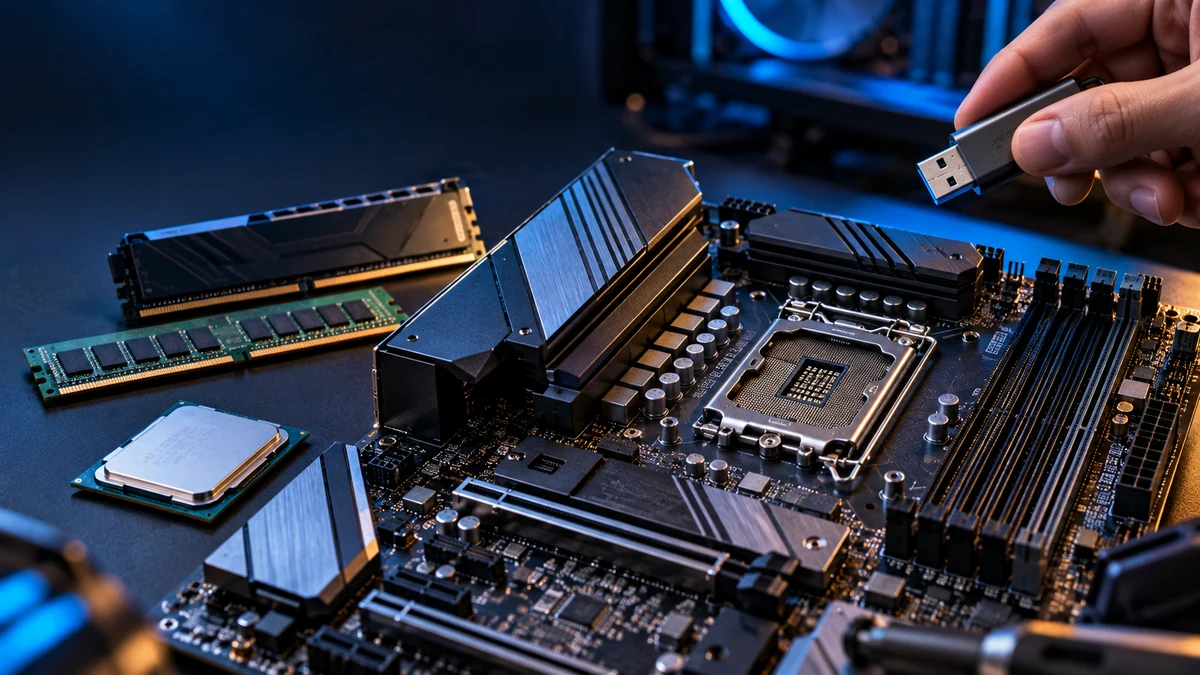
Gigabyte has officially confirmed that its B760 and H610 motherboards will support a new generation of Intel LGA 1700 processors expected in early 2027, extending the life of a desktop platform many PC builders assumed was approaching retirement.
The company announced the compatibility update on October 9, 2026, confirming that both DDR4 and DDR5 versions of its supported motherboards will receive the necessary BIOS support.
For existing Intel PC owners, this could mean upgrading to a newer processor without replacing the motherboard or abandoning perfectly functional DDR4 memory.
The timing is particularly important. Rising memory costs have made building or upgrading a PC more expensive, encouraging consumers to reconsider established hardware platforms.
Key Takeaways:
- Gigabyte confirms support for upcoming Intel LGA 1700 CPUs, expected in early 2027.
- B760 and H610 motherboards are included, covering DDR4 and DDR5 models.
- Compatible systems require a BIOS update before installing the upcoming processors.
- The future Intel CPUs have not been officially detailed, despite reports referring to them as Raptor Lake Next.
- DDR4 remains an attractive alternative for budget PC builders, although DDR5 can deliver better gaming performance.
Gigabyte Confirms New Processor Support for B760 and H610
In its official announcement, Gigabyte confirmed BIOS readiness for upcoming LGA 1700 processors across its B760 and H610 motherboard families.
The announcement covers both DDR4 and DDR5 variants, allowing owners to continue using their existing memory configuration.
Gigabyte says the new BIOS releases are already available through its support website.
That is significant because processor compatibility depends on more than a physically matching socket.
A motherboard’s BIOS must recognize the CPU, initialize the hardware, and apply the appropriate processor microcode. Without compatible firmware, a processor may fail to boot even when it fits the socket.
For example, Gigabyte’s B760M DS3H DDR4 support page lists BIOS version F25, dated September 29, 2026, with preparation for upcoming processor support.
However, users must download the correct BIOS for their exact motherboard model and revision.
The announcement does not mean every LGA 1700 motherboard from every manufacturer is automatically compatible.
Nor does it guarantee that boards already sitting on store shelves have the required BIOS installed.
Why Intel LGA 1700 and DDR4 Still Matter in 2026
Intel introduced LGA 1700 with its 12th-generation Alder Lake desktop processors in 2021.
The socket subsequently supported 13th-generation Raptor Lake and 14th-generation Core processors.
According to Intel’s official compatibility documentation, those processor families work with compatible Intel 600-series and 700-series chipset motherboards.
Depending on the motherboard design, they support DDR4 or DDR5 memory.
That flexibility has become increasingly valuable.
Newer platforms generally prioritize DDR5, but memory prices have risen sharply during 2026.
Research firm TrendForce reported that conventional DRAM contract prices were expected to increase by another 13% to 18% during the third quarter of 2026.
The company attributed continued market pressure partly to demand from AI infrastructure and cloud computing.
For consumers, this creates a practical dilemma.
A newer PC platform may offer improved performance and features, but replacing a motherboard, CPU, and memory simultaneously can considerably increase the total upgrade cost.
Keeping an existing DDR4-based LGA 1700 system eliminates some of those expenses.
It also gives budget-conscious builders another option instead of requiring an immediate transition to DDR5.
What We Know About Intel’s Upcoming 2027 Processors
Gigabyte’s announcement provides strong evidence that additional Intel processors are coming to LGA 1700.
However, it reveals relatively little about the chips themselves.
The company confirms the socket, expected launch period, and motherboard compatibility. It does not specify final processor names, clock speeds, core counts, performance benchmarks, or retail prices.
Industry reports have used the unofficial name Raptor Lake Next for the anticipated processors.
Leaks suggest that Intel could refresh existing Raptor Lake designs rather than introduce an entirely new architecture.
Those claims remain unconfirmed.
This distinction matters because an updated model name does not necessarily mean a major performance improvement.
Intel could choose to emphasize affordability, availability, or compatibility rather than introducing substantial architectural changes.
Until the company publishes specifications and independent reviewers test the processors, their real-world performance remains unknown.
The clearest confirmed development is that Gigabyte is preparing existing motherboards to recognize the upcoming CPUs.
The Full Upgrade-Cost Breakdown: DDR4 vs DDR5 Platforms
The potential savings become easier to understand when comparing the components required for different upgrade paths.
| Component | Existing LGA 1700 DDR4 System | New DDR5 Platform |
|---|---|---|
| Processor | Purchase compatible CPU | Purchase compatible CPU |
| Motherboard | Reuse supported B760/H610 board | Purchase new board |
| Memory | Reuse existing DDR4 | DDR5 purchase may be required |
| BIOS | Free firmware download | May require setup or update |
| CPU cooler | Reuse if compatible and adequate | Check mounting compatibility |
| Windows and software | Usually retain installation | May require reactivation or setup |
The table compares potential component requirements, not confirmed retail prices. Intel has not announced pricing for the upcoming 2027 processors.
For someone who already owns a compatible motherboard and DDR4 memory, replacing only the CPU could be considerably cheaper than rebuilding the entire platform.
However, DDR4 does involve performance compromises.
In a mid-2026 gaming benchmark comparison, Tom’s Hardware found that DDR4 configurations generally delivered around 11% to 14% lower gaming performance than comparable DDR5 configurations in the tested scenarios.
Some individual games showed larger differences.
Those results should not be interpreted as a universal performance penalty. Actual differences depend on the processor, memory configuration, game, graphics card, and resolution.
For existing DDR4 owners, the decision is therefore about balancing potential savings against the additional performance a newer platform may provide.
How to Prepare a Gigabyte Motherboard for the 2027 CPUs
Owners considering a future upgrade should begin by identifying their exact motherboard model and hardware revision.
Gigabyte provides separate support pages for different board variants, and installing incorrect firmware can cause serious problems.
Before making changes, check the manufacturer’s CPU compatibility list and review the available BIOS versions.
A typical preparation process involves:
- Identifying the motherboard model and revision.
- Visiting the official Gigabyte support page.
- Checking the processor compatibility list and BIOS requirements.
- Downloading the appropriate firmware.
- Following Gigabyte’s update instructions with a stable power supply.
- Confirming that the update completed successfully.
Some Gigabyte motherboards include Q-Flash Plus, allowing BIOS updates without a processor installed. Others use different update procedures.
Users should not assume every B760 or H610 model offers identical flashing features.
Processor cooling and motherboard power delivery also matter, particularly when upgrading an entry-level H610 system.
Is LGA 1700 Still Worth Keeping in 2027?
Gigabyte’s announcement changes the upgrade outlook for owners of compatible Intel motherboards.
Instead of immediately replacing an older platform, they may have another opportunity to improve CPU performance while preserving existing components.
The development is especially relevant to budget gaming PCs, home computers, and businesses managing large numbers of desktop systems.
Still, buyers planning completely new systems should wait for Intel’s official processor specifications, pricing, and independent performance tests.
A new DDR5 platform may ultimately offer better long-term value for users who prioritize higher performance, expanded connectivity, or future upgrades.
The most important takeaway is that LGA 1700 is gaining another upgrade opportunity, not necessarily becoming Intel’s long-term flagship platform.
With DDR4 remaining relevant and memory costs under pressure, extending support for existing hardware makes practical sense.
For more coverage of processors, PC hardware, and upcoming technology launches, visit Tech News Home.
Frequently Asked Questions About Gigabyte LGA 1700 Support
Will Gigabyte B760 and H610 motherboards support Intel’s 2027 CPUs?
Yes. Gigabyte has officially confirmed BIOS support for upcoming LGA 1700 processors expected in early 2027 across its B760 and H610 motherboard families. Users should verify compatibility and install the required BIOS for their specific board.
Can I keep my DDR4 RAM when upgrading to the new Intel processors?
Gigabyte confirms support for both DDR4 and DDR5 motherboard variants. Owners of supported DDR4 boards should be able to retain compatible DDR4 memory, although final processor-specific requirements should be checked when Intel releases the new CPUs.
What is Raptor Lake Next, and when will it launch?
Raptor Lake Next is an unofficial name used in industry reporting for anticipated Intel processors. Gigabyte expects upcoming LGA 1700 CPUs in early 2027, but Intel has not yet officially confirmed their final specifications, branding, pricing, or exact release date.
Official Sources and Further Reading
- Gigabyte — Official Announcement of 2027 LGA 1700 Processor Support — October 9, 2026 confirmation of BIOS support for B760 and H610 motherboards, including DDR4 and DDR5 versions.
- Gigabyte — B760M DS3H DDR4 BIOS and Motherboard Support — Official firmware downloads, BIOS version history, and preparation for upcoming processors.
- Intel — Official 12th, 13th and 14th Generation CPU Compatibility — Intel’s documentation covering LGA 1700, supported chipsets, and DDR4/DDR5 compatibility.
- TrendForce — DRAM Market Pricing and AI Server Demand — Research on 2026 memory-market conditions and DRAM pricing pressure.
- Tom’s Hardware — DDR4 vs DDR5 Gaming Performance Tests — Independent gaming benchmarks comparing memory performance on Intel LGA 1700 processors.