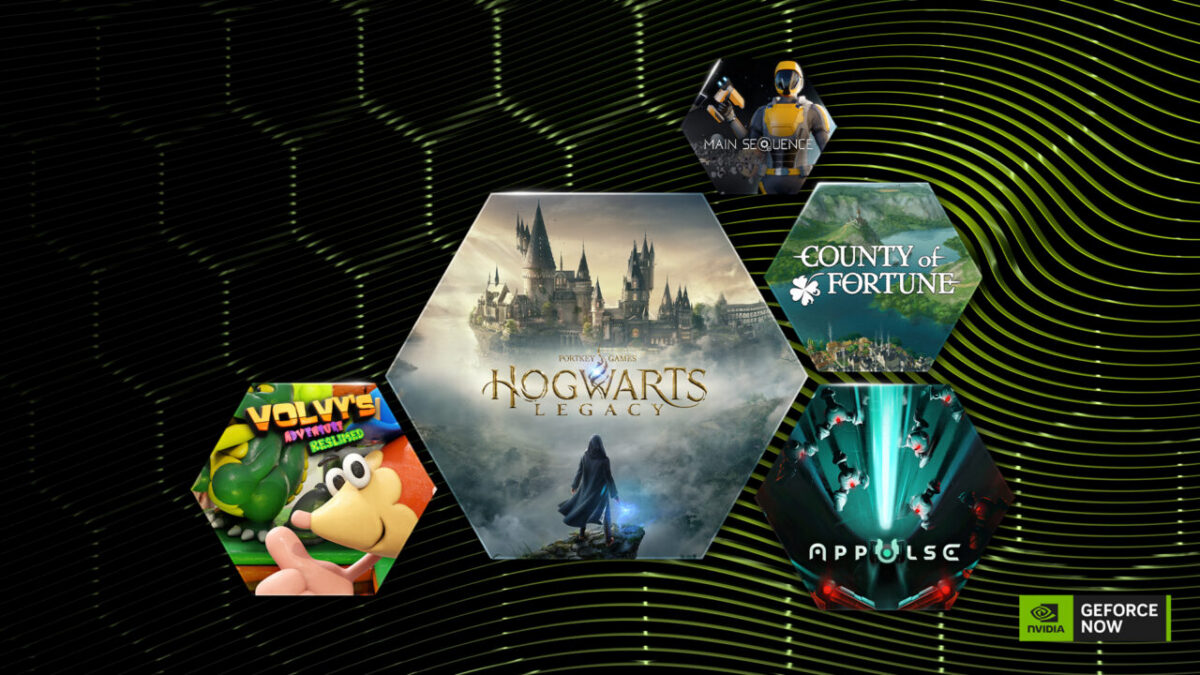
Hogwarts Legacy’s DLSS 5 update is now available on GeForce NOW, NVIDIA announced on November 5. The upgrade brings its 3D-Guided Neural Rendering technology to the game’s cloud-streamed version, offering another way to see the graphics changes without installing a new GPU locally.
For returning players, the question is straightforward: does the revised lighting improve the atmosphere while keeping the world looking like the game they remember? That calls for looking beyond a single promotional screenshot.
Key takeaways
- NVIDIA confirms the Hogwarts Legacy DLSS 5 cloud update has arrived.
- The rendering changes focus on lighting and materials.
- Game access, membership tier and connection quality remain separate considerations.
What NVIDIA says is live
In its November 5 GeForce NOW update, NVIDIA says Hogwarts Legacy supports streaming through Steam, Epic Games and Xbox with Play Anywhere support. It describes Ultimate access with RTX 5080-class performance.
The company says Avalanche Software used developer controls to tune the integration around the game’s visual style. The update also sits alongside Multi Frame Generation and Ray Reconstruction support.
These are NVIDIA’s launch details, not independent benchmark findings. We have not run a hands-on performance comparison for this article.
DLSS 5 changes more than resolution
NVIDIA’s technical announcement explains that 3D-Guided Neural Rendering uses the game engine’s rendered frame as a foundation, adding lighting and material detail while retaining the underlying geometry and textures.
That makes the visual question different from merely asking whether an image is sharper. A rendering change can affect the appearance of a face, the response of fabric to light or the atmosphere of a dim interior. Whether a player prefers the result is partly an artistic judgment.
For an informative comparison, use the same location, camera position and time of day. Watch movement as well as still frames: a treatment that looks convincing in a screenshot needs to remain coherent as the camera turns.
A faster model is not a universal FPS promise
NVIDIA’s October announcement described a neural-rendering model that runs twice as fast as its earlier version. That is a claim about a particular processing stage, not a promise that Hogwarts Legacy’s overall frame rate doubles.
The distinction matters because a complete frame has multiple costs. Faster processing in one stage can help, but the final experience also depends on the rest of the rendering workload and the settings in use.
We would look for measured frame times and responsiveness alongside an FPS counter. For a cloud service, local input and the delivery of the video stream also shape how smooth the game feels.
What to check before streaming
NVIDIA’s GeForce NOW overview explains that users connect supported game stores and subscriptions to stream eligible games they already have access to. A cloud membership should not be confused with buying every game in the catalog.
Before subscribing for this update, confirm that your store version is supported, that the required membership is available in your region and that your device meets the current service requirements. The service handles game installations and updates in the cloud.
Our practical view: first test the connection where you actually play. A fast plan on paper does not tell you how a busy home network behaves during an evening session. Check image stability and input response before making a longer commitment.
Frequently asked questions
Does this give every Hogwarts Legacy player DLSS 5?
The announcement covers specific supported hardware and the cloud service. It should not be read as confirmation of the same graphics feature on every console or PC.
Do I need a new local graphics card for GeForce NOW?
The game is rendered remotely, so the local device handles the stream rather than the full game workload. Device and connection requirements still apply.
Keep up with more releases and updates in Tech News Home’s gaming coverage.
Primary sources: NVIDIA’s November 5 release, technical DLSS announcement and GeForce NOW overview, linked above.