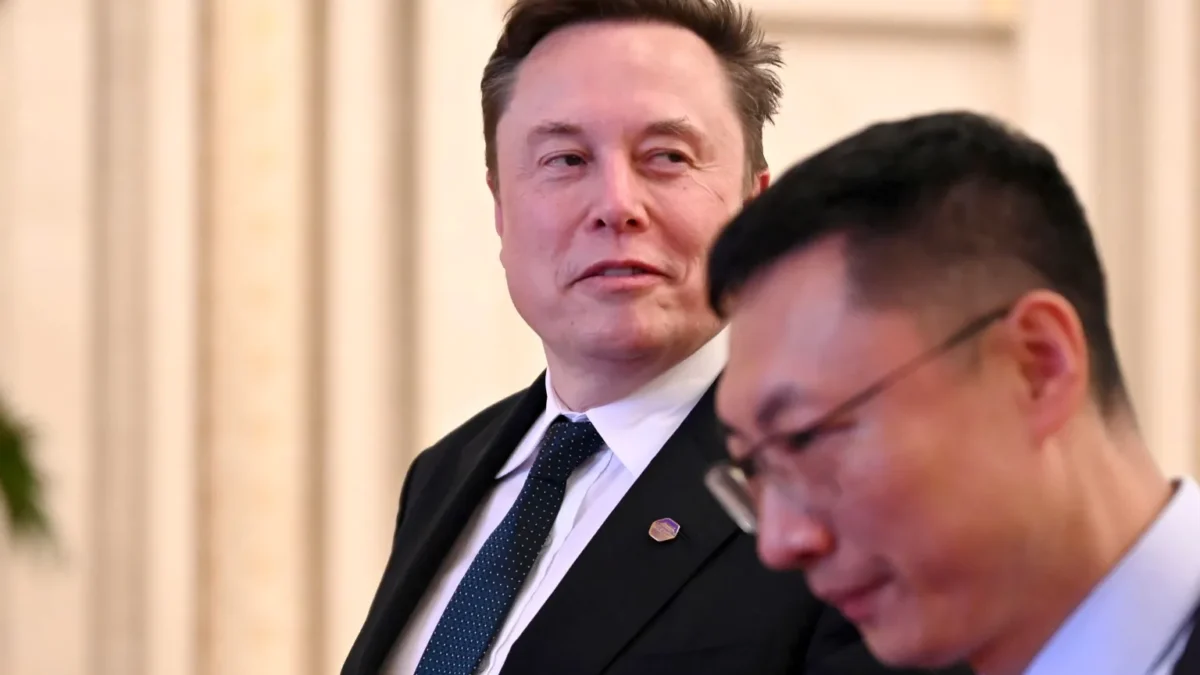
Elon Musk has intensified his public criticism of Indian billionaire Mukesh Ambani as SpaceX’s Starlink satellite internet service remains unable to begin commercial operations in India, raising fresh questions about competition, regulatory approvals, and the country’s rapidly developing satellite broadband market.
On October 9, 2026, Musk targeted the Reliance Industries chairman in another social media post, suggesting that powerful business interests were preventing Starlink from competing with established telecommunications providers.
Indian authorities have rejected allegations of discriminatory treatment, maintaining that Starlink and other licensed satellite operators must complete security assessments before receiving the spectrum needed to operate.
The confrontation highlights a growing tension between global satellite internet companies seeking access to India’s market and regulators responsible for national security and telecommunications oversight.
Key Takeaways:
- Elon Musk has publicly accused Mukesh Ambani of obstructing Starlink’s entry into India’s internet market, without presenting evidence of interference.
- India’s government denies discriminatory treatment and says three licensed satellite operators are undergoing security assessments.
- Starlink already holds an Indian satellite communications licence but cannot launch commercially without further approvals.
- Reliance Jio signed a Starlink distribution agreement in 2025, despite the current dispute.
- No confirmed commercial launch date has been announced for Starlink in India.
Musk Turns Starlink’s Regulatory Frustration Into a Public Confrontation
The latest controversy began when Musk accused unnamed influential business figures of preventing Starlink from launching in India to protect their commercial interests.
His criticism soon became more personal.
In posts on X, Musk questioned Ambani’s influence over Indian decision-making and sarcastically addressed the Reliance chairman as “Prime Minister Ambani.”
Musk argued that Starlink could expand reliable internet access to underserved communities, improve educational opportunities, and help small businesses participate in the digital economy.
However, the accusations remain allegations rather than established findings.
Musk has not publicly presented evidence demonstrating that Ambani personally intervened in the government’s approval process.
Reliance Jio, the telecommunications business controlled by Reliance Industries, has not publicly substantiated or accepted Musk’s claims.
India’s telecom minister, Jyotiraditya Scindia, also rejected the suggestion that the country’s telecommunications sector operates under a permitted monopoly.
According to Reuters’ October 9 report, Scindia defended India’s competition framework while addressing Musk’s allegations.
The disagreement has consequently become more than a dispute over a delayed product launch. It now involves questions about corporate influence, market access, and the independence of regulatory decision-making.
Why Starlink Still Cannot Launch in India
Starlink’s difficulties are not simply the result of failing to obtain an initial telecommunications licence.
The company has already secured an important authorization to provide satellite communications services in India.
According to the Department of Telecommunications’ official GMPCS licensing records, Starlink Satellite Communication Private Limited is listed alongside Jio Satellite Communications and OneWeb India Communications as an authorized operator.
Nevertheless, receiving a licence does not automatically permit commercial satellite broadband operations.
Companies must also demonstrate compliance with security requirements and obtain the necessary radio spectrum assignments.
On October 8, India’s Ministry of Communications issued an official regulatory clarification, explaining that all three licensed operators were undergoing security assessments.
The ministry stated that the companies were at broadly comparable stages of the regulatory process.
This directly challenges Musk’s suggestion that Starlink is uniquely disadvantaged.
Importantly, the government’s statement does not establish when the reviews will conclude or when commercial services will begin.
For prospective customers, the distinction is straightforward: Starlink has permission to pursue satellite communications operations, but it has not yet completed every requirement for launching its service.
The Unexpected Twist: Reliance Jio Previously Partnered With Starlink
The confrontation is particularly notable because Starlink and Reliance Jio were previously preparing to work together.
In March 2025, Jio Platforms announced an agreement with SpaceX to bring Starlink broadband services to customers in India.
According to Reliance Industries’ official announcement, the arrangement would allow Jio to distribute Starlink equipment through its retail network and online channels, subject to regulatory authorization.
The companies also planned to explore opportunities involving broadband connectivity for businesses and remote communities.
Bharti Airtel separately announced a partnership with SpaceX to explore offering Starlink services through its own distribution channels.
These agreements demonstrate that the relationship between traditional telecom operators and satellite broadband providers is more complicated than a straightforward rivalry.
Established telecommunications companies can compete with Starlink while simultaneously benefiting from its technology.
For Jio, satellite connectivity could complement existing fiber and wireless broadband networks in locations where conventional infrastructure is difficult to deploy.
For SpaceX, working with established operators could provide access to distribution channels, technical infrastructure, and local market experience.
The partnership announcements do not resolve Musk’s allegations, but they provide important context that complicates the claim of a uniformly hostile telecommunications industry.
Satellite Spectrum and Security Requirements Remain Central Obstacles
A significant part of India’s satellite broadband debate concerns spectrum: the radio frequencies that allow satellites, ground stations, and customer equipment to communicate.
Unlike conventional mobile networks, satellite internet systems transmit data through spacecraft orbiting Earth.
Starlink primarily uses satellites in low Earth orbit, reducing the distance signals must travel compared with traditional high-altitude satellite systems.
That architecture can support lower latency, making satellite connections more practical for video meetings, online services, and other interactive applications.
However, satellite operators still require access to authorized frequencies.
India has previously faced disagreements over whether commercial satellite spectrum should be assigned administratively or auctioned, with Starlink and Reliance Jio taking different positions.
Security compliance presents another challenge.
Indian satellite licensing rules include obligations relating to lawful interception, network gateways, data routing, and user privacy.
These requirements reflect the sensitive nature of communications infrastructure.
A satellite network operating across international boundaries introduces regulatory challenges that differ from those associated with a conventional domestic broadband connection.
The relevant question is therefore not whether Starlink’s technology works elsewhere, but whether its proposed Indian operations satisfy the country’s legal and technical conditions.
What the Dispute Means for India’s Internet Market
For India, the larger issue extends beyond the confrontation between two billionaires.
Satellite broadband could help connect communities where fiber installation is expensive, geographically difficult, or commercially unattractive.
Remote villages, mountainous regions, and isolated businesses could potentially benefit from additional connectivity options.
Satellite networks may also provide alternative communications capacity during emergencies when terrestrial infrastructure is damaged.
But wider availability does not automatically guarantee affordability.
Starlink’s eventual impact will depend on equipment costs, subscription pricing, network capacity, and the geographic distribution of its services.
India already has extensive mobile broadband infrastructure, meaning satellite connectivity will likely be most valuable where conventional networks remain insufficient.
Competition could benefit consumers by increasing available options, but only if companies can enter the market under clear, predictable rules.
For readers following the wider telecommunications and space economy, TechNewsHome covers the technology developments shaping connectivity, digital services, and global competition.
Looking ahead, three developments will determine Starlink’s immediate prospects: completion of security assessments, assignment of operating spectrum, and authorization to begin commercial services.
None currently has a publicly confirmed completion date.
The public dispute may intensify pressure for greater regulatory transparency, but there is no demonstrated evidence that Musk’s criticism will accelerate approval.
Ultimately, Starlink’s Indian ambitions will be decided by regulatory compliance, commercial execution, and its ability to compete with established providers.
The central takeaway is clear: Starlink has made meaningful progress toward entering India, but obtaining a satellite communications licence is not the same as securing permission to launch a commercial internet service.
Until the remaining requirements are satisfied, the company’s Indian customers will continue waiting.
FAQs
1. Why is Starlink’s launch delayed in India?
Starlink is awaiting completion of security compliance assessments and satellite spectrum assignment before it can begin commercial operations.
2. Is Mukesh Ambani blocking Starlink in India?
Elon Musk has accused Ambani of obstructing Starlink’s entry, but he has not publicly provided evidence. The Indian government denies discriminatory regulatory treatment.
3. Has Starlink received a licence to operate in India?
Yes. Starlink has obtained a satellite communications licence, but additional security and spectrum requirements must be completed before commercial service can begin.
Official & Reliable Sources
- India’s Ministry of Communications — October 8, 2026: Official statement on fair and non-discriminatory satellite communications regulation
- Department of Telecommunications, Government of India: Official satellite communications licensing information and regulatory requirements
- Reliance Industries — March 12, 2025: Official Jio and SpaceX Starlink distribution agreement
- Reuters — October 9, 2026: India rejects monopoly allegations following Elon Musk’s criticism of Mukesh Ambani