NVIDIA is putting the CPU at the center of its latest argument about scaling AI agents. In a November 5 update, the company said its Vera processor can combine fast task execution with greater agent capacity per watt, citing internal comparisons and partner tests.
The pitch addresses a practical issue: an AI agent does more than ask a model for an answer. It also needs software environments in which to run tools, inspect files and test code. Those steps can become a constraint even when powerful GPUs are available.
Key takeaways
- NVIDIA’s new update emphasizes CPU execution and energy efficiency for agents.
- Its performance comparisons remain company claims, with results tied to specific workloads.
- Daytona’s published sandbox tests provide a separate view of performance under heavy concurrency.
What NVIDIA is claiming
In its November 5 Vera update, NVIDIA describes a 100-megawatt data-center comparison in which Vera supported 1.6 times as many agents per watt as its fastest x86 comparison, while delivering twice the agent speed of its most energy-efficient x86 comparison.
Those statements describe different comparison points. They should not be combined into a blanket promise that every application becomes twice as fast while consuming less power.
The post also cites partner experiences, but we have not independently reproduced NVIDIA’s results. Buyers need the workload, configuration and measurement conditions behind a headline ratio before applying it to their own systems.
Why AI agents need more than GPUs
NVIDIA’s Vera product overview describes a processor built around 88 Olympus cores and 176 threads, with LPDDR5X memory. It lists code execution, tool use, data processing and orchestration among the target workloads.
In plain terms, the GPU can help generate the next instruction while the CPU executes parts of the resulting work. If an agent spends too long waiting for a tool or a software environment, a quicker model response alone will not remove that delay.
An illustrative coding task makes the point. The assistant may propose a patch quickly, but the full job still involves opening files, applying changes and running a test suite. The user cares when the task finishes, not just when the first answer appears.
What Daytona measured
In an October 7 report referenced by NVIDIA, Daytona compared Vera with AMD EPYC systems using its sandbox infrastructure. It reported starting 1,000 sandboxes in 10.8 seconds on Vera, against 32.3 seconds on an EPYC 9575F and 88.4 seconds on an EPYC 9755.
At 2,000 concurrent sandboxes, Daytona reported 12.7 completed agent jobs per second on Vera, compared with 8.1 and 10.9 on the two EPYC configurations respectively. Its agent task involved repairing a small Python package and running tests.
These are Daytona’s measurements of its setup, not a universal ranking of all server workloads. The exact job and concurrency level matter when interpreting the gap.
Fast startup and sustained work are different
Our analysis: two questions should be kept separate. How quickly can a platform make environments ready, and how much useful work can it sustain once those environments are busy?
A short startup time helps a service that constantly creates temporary workspaces. A long-running task may place more weight on steady execution, memory behavior or another bottleneck. A single benchmark cannot tell every operator which factor dominates their costs.
Evaluation should therefore begin with the actual application. Track successful task completion and response time under load, then compare the resources consumed to produce that work. Counting active agents alone says little about how productive they are.
Why the announcement matters
Vera’s positioning shows NVIDIA competing for more of the infrastructure surrounding model inference. The commercial opportunity includes the software execution that happens between model calls, not just the generation itself.
For readers following AI agents moving into everyday services, this is part of the less visible engineering behind the product. A convincing assistant needs a responsive execution system as well as a capable model.
Frequently asked questions
Does Vera replace the GPU?
No. NVIDIA describes CPU and GPU roles that work together, alongside standalone CPU uses.
Are the speedups guaranteed for every agent?
No. The published figures apply to the tested configurations and workloads. Application-specific measurements are still needed.
Primary sources: NVIDIA’s November 5 update, the Vera product overview and Daytona’s benchmark report, linked above.
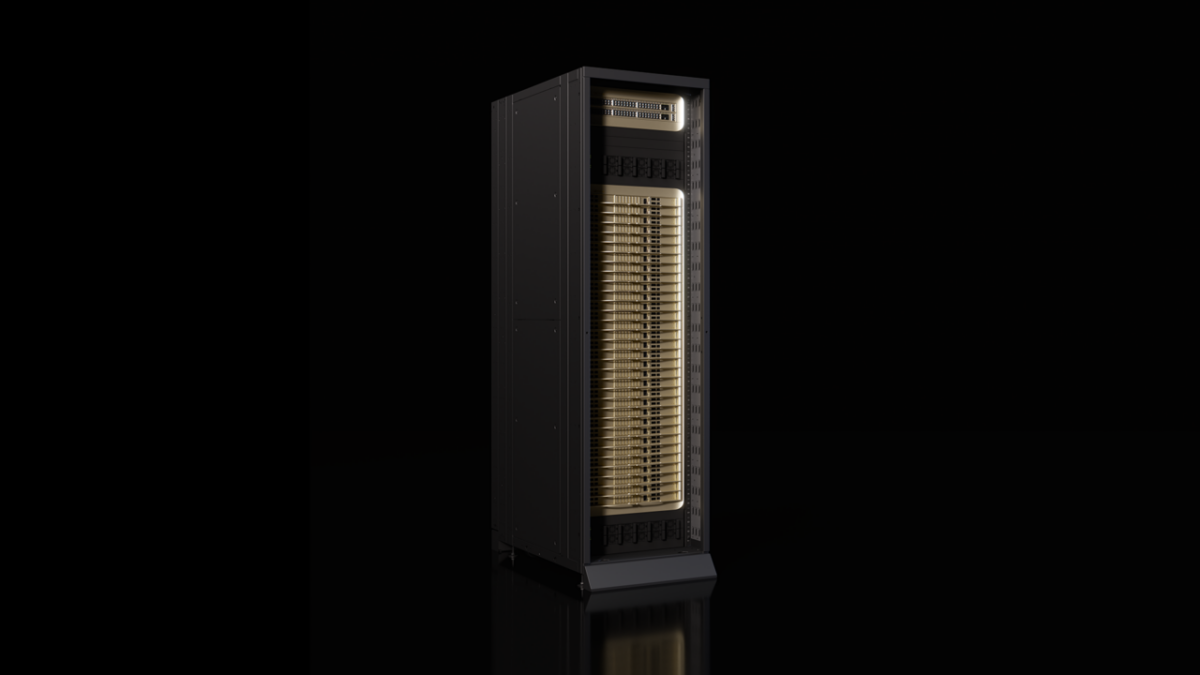
Featured image: NVIDIA Vera CPU promotional rendering.